
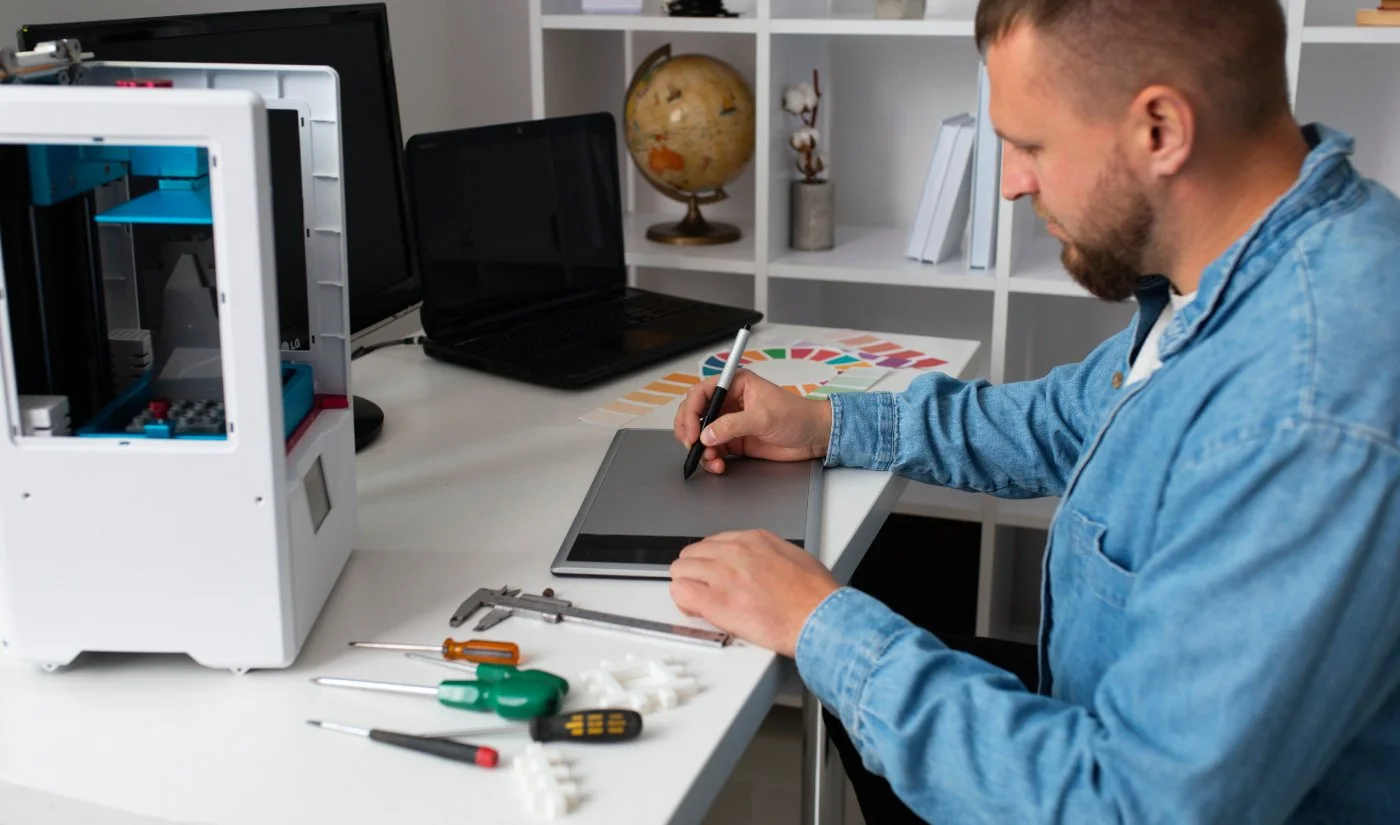
When you plan a 3D printing project in Perth, knowing what can go wrong helps you avoid wasted time and budget. According to the IMARC Group, the 3D printing market in Australia reached about $672.3 million in 2025 and is set to grow significantly through 2026.
So, whether you want custom signage or promotional pieces, understanding common errors up front helps ensure a more reliable outcome.
Avoid These Common 3D Printing Errors
Learn how to identify and prevent the most frequent mistakes in 3D printing in Perth to save time, materials, and achieve flawless results.
Mistep Materials for Printing
Picking the wrong material is one of the most frequent mistakes people make with 3D printing. This often happens when you choose a filament or resin without considering how and where the final piece will be used. For example, a decorative element might be fine in standard PLA, but outdoor signage for your business or load‑bearing parts requires stronger, more weather‑resistant materials.
So, before starting your design, make material decisions based on function, not convenience. According to the Department of Climate Change, Energy, the Environment and Water, Australians used about 4.0 million tonnes of plastic products and packaging in 2023-24, and only a small portion was recycled. This highlights the importance of selecting materials suited to their purpose rather than creating waste. To avoid mistakes, consult experts who can recommend materials that balance cost, strength, and finish quality for your specific project.
Design Errors That Cause Print Failures
Another common issue is that files are not optimised for additive manufacturing. Problems like insufficient wall thickness, non‑manifold edges, or missing supports can cause layers to fail or prints to warp.
That said, before you start printing, take time to prepare your design correctly so it reflects how the printer will build your object layer by layer. An expert 3D printing tip is to run a test slice in your software before the full print. This helps identify potential weak points and areas that need additional support.
Also, use design software that checks geometry and adjust your model to match real‑world production constraints. If you're creating 3D-printed art or functional prototypes, small design adjustments early on can save hours of machine time and material.
Overlook Printer Capabilities and Scale
You may want a large corporate display or intricate ideas for 3D-printing, but not every 3D printer can handle every job. According to PoiData, approximately 585 3D printing services operate across Australia, each offering different machine capabilities. So, understanding what your provider can realistically support is important.
Attempting to print beyond a machine’s capacity often leads to frustration, with issues such as prints detaching from the bed, inconsistent extrusion, or failed segments due to size limitations. Larger-format prints also often require segmentation and post-assembly. Discussing the maximum build volume and layer resolution with your provider before starting ensures your designs are achievable and the final results meet your expectations.
Post-Processing Neglect Reduces Quality
Many users assume that once a piece comes off the printer, the job is done, but this mistake can leave your work looking unfinished or structurally weak. Depending on the material and design, you may need sanding, sealing, painting, or reinforcing to achieve the desired results.
As such, planning for post-processing in your project timeline and budget improves appearance and functional performance. When you skip this phase, your piece may look unfinished or be structurally weak.
This is especially true for items used in public spaces or marketing applications by a signage company in Perth, which can result in a final product that doesn't reflect your brand well. Learning from the common mistakes to avoid in professional signage ensures your 3D-printed branding remains durable and effective.
Get Better 3D Printing Results with Artcom Fabrication
If you avoid common errors such as poor material selection, unrefined files, and overlooked printer limits, your projects will be more efficient and successful. That said, using 3D printing in Perth effectively allows you to achieve great quality by combining expertise with careful preparation.
At Artcom Fabrication, we guide you through every step of your project, from material selection to final finishing. Whether you need striking retail displays or tailored 3D models, our team ensures predictable, high‑quality results. For more information, get in touch with us today!
Frequently Asked Questions (FAQs)
Here are answers to common questions about 3D printing in Perth:
How does a 3d printer work?
A 3D printer works by adding material layer by layer to create a physical object from a digital design. It follows precise instructions from a 3D model to build the shape and details.
How long does a typical 3D print take?
Print time depends on size, complexity, and materials. Smaller pieces may take hours, while large prints could take several days.